Tag: Deborah Hill D.C.

Why Most Diets Fail (And What Dr. Deborah Hill Did About It)

Here is a statistic that the diet industry would rather you not think about too hard: the vast majority of people who lose weight on a diet gain it back within a few years. Studies consistently show failure rates hovering between 80% and 95% for long-term weight maintenance. And yet the industry keeps growing, selling the same approaches with new packaging.

Dr. Deborah Hill looked at this pattern and asked a different question than most: What if the problem isn’t the dieters? What if it’s the diets?

Dr. Hill — a licensed, board-certified Doctor of Chiropractic and former director of the West Burbank Chiropractic Center in Los Angeles — came to weight loss from a health background that had always emphasized non-invasive, drug-free solutions. She had watched people struggle with chronic pain and found better answers. She applied the same diagnostic thinking to weight loss.

Her diagnosis was clear: the willpower model underlying traditional dieting is fundamentally flawed.

When you diet, you’re typically relying on effortful, conscious self-control. Every meal, every snack, every moment of temptation requires an active act of will. That kind of willpower is real — but it’s finite. It depletes across the day. It gets worn down by stress, by fatigue, by social pressure. And when it runs out — as it inevitably does — the eating accidents happen, the diet crashes occur, and the guilt cycle begins again.

This is why, as Dr. Hill points out, dieters are “usually uncomfortable, stressed and have eating accidents and diet crashes daily.” It’s not weakness. It’s the predictable result of a system that depends on a resource that runs out.

Her solution — the Shield Method — is built on a completely different resource. Rather than training effortful willpower, it trains automatic self-regulation. The kind that doesn’t deplete. The kind humans already use, successfully, for demanding tasks like driving.

The distinction matters enormously. Automatic self-regulation doesn’t require you to fight your impulses moment to moment. It operates at a deeper level — reshaping the experience of eating so that overeating doesn’t feel appealing in the first place. As one test participant, Anna R., described it: “Once my mind is reprogrammed, I don’t even notice my stomach growl.”

That’s not suppression. That’s transformation.

Clinical test results supported this completely. Every participant — 100%, including MDs and psychologists — certified the Shield Method as the most reliable and most enjoyable weight loss method they had ever used. They preferred it to every other approach, including other psychological and behavioral methods.

And here’s what makes the failure-rate problem particularly interesting in this context: the Shield Method appears to build durable change. Diane D., a self-described skeptic, explained the distinction from her own experience: “On every other weight loss program, I had doubts that it would work on a long-term basis. I am convinced this will.”

That confidence isn’t based on hope. It’s based on the felt experience of a different kind of control — one that doesn’t require ongoing effort to maintain.

Beyond weight loss, the method’s broader effects on willpower were striking. More than half of participants reduced alcohol consumption by at least 75% spontaneously. Some quit smoking. The capacity being built isn’t narrow — it generalizes to other behavioral areas, further suggesting that something structural is changing, not just surface-level habits.

The diet industry has been solving the wrong problem for decades. It’s been refining the what of eating while ignoring the how of self-control. Dr. Hill solved the how.

The Shield Method is available as an online course at www.shielders.com. The first 500 qualified applicants during the launch period can access it for free (regular price: $1,999).

The pattern doesn’t have to repeat. Something different exists now.
From Chronic Pain Relief to Behavioral Freedom

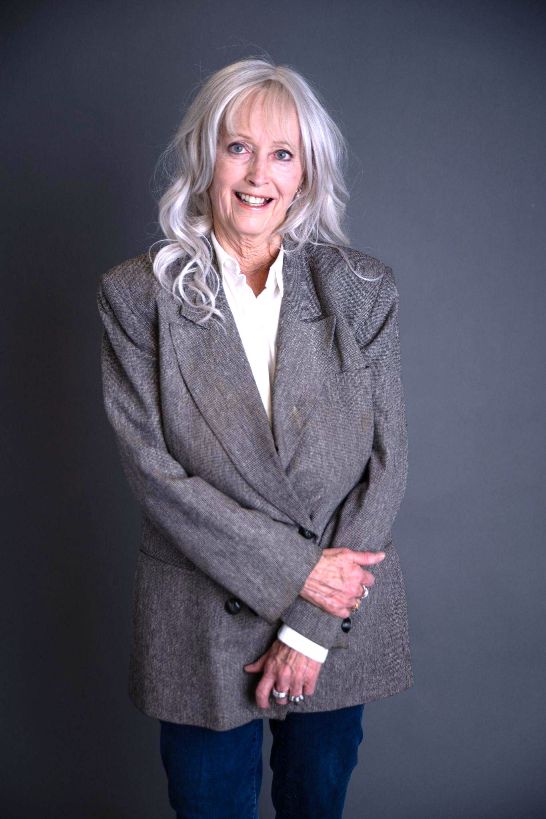
Dr. Deborah Hill
Dr. Deborah Hill

Long before the Shield Method entered the conversation, Dr. Deborah Hill was known for something else entirely: helping patients escape chronic pain. As a chiropractor in Los Angeles’ Verdugo Hills, she treated severe arthritis, frozen shoulders, and immobile joints that many believed were permanent conditions.

Through years of clinical refinement, Deborah Hill, D.C. developed Myoprobe Therapy®, a hands-on approach that restored mobility and eliminated pain without medication. Patients often arrived discouraged and left with renewed hope—and full range of motion.

While teaching mind-body techniques to support pain recovery, Dr. Hill noticed an unexpected side effect. Patients began losing weight without trying. They reported diminished cravings and a newfound sense of control around food.

Rather than dismissing the pattern, she investigated it.

What emerged was a deeper understanding of how the brain manages automatic control. Dr. Hill realized that the same neurological system responsible for safely navigating a freeway could be redirected toward eating behavior. This insight led to the creation of the Shield Method.

The results extended beyond weight loss. In a large test group, 55.17 percent of participants reduced alcohol consumption by at least 75 percent without instruction. Several quit smoking. One individual reported resolving a long-standing compulsive behavior after years of unsuccessful therapy.

These outcomes reinforced Dr. Hill’s belief that the method strengthens core self-command rather than addressing isolated habits. Once that internal system is activated, improvements cascade naturally into other areas of life.

Participants consistently describe a shift in identity. Instead of viewing themselves as people who “lack willpower,” they experience repeated success, which rebuilds trust and confidence. One participant summarized it simply: life becomes a series of small victories rather than repeated failures.

Dr. Hill never set out to redefine behavioral change. Her focus was always on helping the person in front of her. Yet by paying attention to unexpected results, she uncovered a principle with far-reaching implications.

From frozen joints to mental freedom, her work demonstrates that profound breakthroughs often arise quietly—when someone is willing to observe, question, and follow the evidence wherever it leads.

From Years of Therapy & Hypnosis to “It’s Painless and Easy” — One Woman’s Story

Dr. Deborah Hill
Dr. Deborah Hill

Some of the most powerful endorsements for the Shield Method come from people who have already tried everything else.

Melinda C. had been in traditional therapy for years. She had done hypnosis, support groups, food journals, apps—you name it. Progress was always slow, painful, and temporary.

Then she joined one of Dr. Deborah Hill’s early test groups.

Her words afterward: “I was in therapy for years and even took hypnosis. It took forever to change any behavior and I could always fall back on old habits. It took a tremendous amount of energy to do better. Dr. Hill has made it painless and easy to do better every time.”

That single sentence sums up why so many therapy veterans are quietly switching to the Shield Method. It doesn’t fight the old habits—it simply installs a new operating system that makes the old habits irrelevant.

Diane D. told a similar story. She walked into the test group hostile, ready to debunk the whole thing as “just another scam.” She walked out saying Dr. Hill had given her a tool that “changed my whole life” and that she now had zero doubt it would work long-term.

Joyce W. noticed the emotional shift: “Instead of going through life experiencing a series of small failures (each time you don’t stick to your plan), you will now experience successes. This gives you a healthy, positive self image…”

If you’ve spent years (or decades) in the slow, uphill battle of traditional methods require, hearing “painless and easy” probably sounds too good to be true. The people who’ve lived both realities say it isn’t.